I de-fected to Wordpress. Sorry.
I write about fashion and the environment and stuff.
Go, Go, Go
Sunday, 8 March 2009

Tuesday, 13 January 2009
Recycling in Cardiff gets Re-vamped
When Cardiff's food waste recycling packs arrived on the city's doorsteps in October 2008, it was hailed as a breakthrough in sustainable city living. But Rebecca Clark, 26, wasn’t buying the hype. “The scheme is great but it’s not enough,” she says. “You can send people the boxes, bags and leaflets on how to use them, but it doesn't mean they're going to read them. How many people just put everything in their cupboards and forgot about it? More needs to be done to reach those people.” Frustrated at the Council’s approach, she took matters into her own hands and embarked on an ambitious plan to educate the city about green living – beginning with the fickle world of fashion.
Rebecca staged Re-Vamp, the city’s first ever large-scale clothes swapping and customisation event, as an antidote to the 'Fast Fashion' phenomenon. Cheaply-produced, poorly-made, stack-‘em-high-sell-‘em-low garments sold by the likes of Primark encourage wastefulness in shoppers. With textiles now making up over 1% of the 330 million tonnes of waste the UK produces every year, Re-Vamp’s first event in November 2008 aimed to educate people about recycling and also featured ‘pedal-powered bingo’ to demonstrate renewable energy.

Rebecca staged Re-Vamp, the city’s first ever large-scale clothes swapping and customisation event, as an antidote to the 'Fast Fashion' phenomenon. Cheaply-produced, poorly-made, stack-‘em-high-sell-‘em-low garments sold by the likes of Primark encourage wastefulness in shoppers. With textiles now making up over 1% of the 330 million tonnes of waste the UK produces every year, Re-Vamp’s first event in November 2008 aimed to educate people about recycling and also featured ‘pedal-powered bingo’ to demonstrate renewable energy.
“My friends and I are quite environmentally aware and often meet up to swap clothes and customise them together,” she says. “Then one day I just thought ‘Why not do this on a larger scale?’” The first event, held in November 2008, was bigger than she ever imagined – over 200 people attended and between them swapped over a thousand garments, all of which may well have ended up on a landfill site otherwise. “We’re still a materialistic society, which is why it was so successful – people like getting clothes for free. But I think we can exploit this to teach people about changing their lifestyles.”
Several organisers took on seamstress roles at the event, demonstrating how to adjust and customize garments, and a ‘Re-vamped fashion show’ was staged featuring a variety of exotic outfits crafted from second-hand fabrics. Rebecca is a believer in the power of actively demonstrating sustainable living - something she feels is missing from current education schemes. “It’s not enough to simply lecture people about recycling, you have to show them how to do it,” she states.
Helen Smith, 26, who assisted with the workshops at the event, agrees that education needs to improve. “It’s really simple to re-use and customise fabrics, but people don’t have the skills to do this,” she says. Helen runs her own environmentally-friendly accessories label, Recycled With Love, but is quick to point out that recycling alone isn't enough. “It’s great to recycle waste, but we shouldn’t actually be producing such a volume of waste in the first place! Everyone’s lifestyles need to change dramatically. Education needs to start early on.”

A council spokesman claimed they already have schemes in place for recycling education. “We run roadshows and do door-to-door visits, but beyond this there’s little we can do. No fines exist for people who fail to recycle, as is the case in other countries, so people should take this issue up with central government,” they stated. But Rebecca is is unsure if fines alone are the answer. “We should give people an incentive rather than a punishment. People think it's difficult and a chore to be sustainable, but that's not true.”
Rebecca now plans to use Re-vamp as a springboard for bigger schemes. “I worked for a solar-powered café at various festivals over the summer and was really inspired by their work,” she says. “We want to build bigger and more varied workshops, not just on clothes but on all angles of sustainable living. Eventually I’d love to have a permanent studio space in Cardiff to use as an education centre.”
Just two weeks after the first Re-vamp the environmental secretary, Ed Miliband, called for large-scale ‘popular mobilisation’ in the style of the Suffragettes to tackle climate change. Around the country people are waking up to green issues and questioning our lifestyles, yet there is no national movement to unite them and place pressure on the government. It is campaigns like Rebecca's that empower people to take action and fight for change, and as grassroots campaigns mushroom around the UK we could be seeing the seeds of Milliband's called-for movement begin to sprout. But for now Rebecca is taking things one step at a time, with another Re-vamp planned for March and a guest stall at the University's sustainability fayre. "In other cultures [recycling] isn't an effort for people, it's built into their routines," she says. "That's something we're going to have to get over in this country. That's the jump we need to make."

Several organisers took on seamstress roles at the event, demonstrating how to adjust and customize garments, and a ‘Re-vamped fashion show’ was staged featuring a variety of exotic outfits crafted from second-hand fabrics. Rebecca is a believer in the power of actively demonstrating sustainable living - something she feels is missing from current education schemes. “It’s not enough to simply lecture people about recycling, you have to show them how to do it,” she states.
Helen Smith, 26, who assisted with the workshops at the event, agrees that education needs to improve. “It’s really simple to re-use and customise fabrics, but people don’t have the skills to do this,” she says. Helen runs her own environmentally-friendly accessories label, Recycled With Love, but is quick to point out that recycling alone isn't enough. “It’s great to recycle waste, but we shouldn’t actually be producing such a volume of waste in the first place! Everyone’s lifestyles need to change dramatically. Education needs to start early on.”
A council spokesman claimed they already have schemes in place for recycling education. “We run roadshows and do door-to-door visits, but beyond this there’s little we can do. No fines exist for people who fail to recycle, as is the case in other countries, so people should take this issue up with central government,” they stated. But Rebecca is is unsure if fines alone are the answer. “We should give people an incentive rather than a punishment. People think it's difficult and a chore to be sustainable, but that's not true.”
Rebecca now plans to use Re-vamp as a springboard for bigger schemes. “I worked for a solar-powered café at various festivals over the summer and was really inspired by their work,” she says. “We want to build bigger and more varied workshops, not just on clothes but on all angles of sustainable living. Eventually I’d love to have a permanent studio space in Cardiff to use as an education centre.”
Just two weeks after the first Re-vamp the environmental secretary, Ed Miliband, called for large-scale ‘popular mobilisation’ in the style of the Suffragettes to tackle climate change. Around the country people are waking up to green issues and questioning our lifestyles, yet there is no national movement to unite them and place pressure on the government. It is campaigns like Rebecca's that empower people to take action and fight for change, and as grassroots campaigns mushroom around the UK we could be seeing the seeds of Milliband's called-for movement begin to sprout. But for now Rebecca is taking things one step at a time, with another Re-vamp planned for March and a guest stall at the University's sustainability fayre. "In other cultures [recycling] isn't an effort for people, it's built into their routines," she says. "That's something we're going to have to get over in this country. That's the jump we need to make."
Wednesday, 3 December 2008
Brands: Bigger than Jesus?
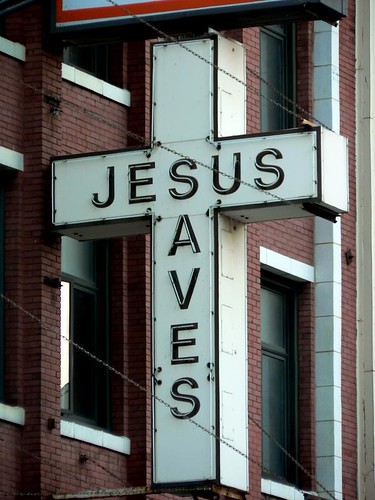
Brands are the new religion. In these secular times we no longer look to a deity or prophet for our values and aspirations, but to these pretty little symbols. When we buy a brand we are not merely purchasing a product, but buying into the values and beliefs the brand represents.
Magazines have embraced this concept for a while. Vice has a club venue, record label and film studio, Elle has a clothing range and Cosmopolitan has everything from false eyelashes to bedspreads. But how easy is it for a single journalist to pull this off? We have individuals turning themselves in to brands, some of the most famous being Katie Price, Paris Hilton and The Beckhams, between them selling an A-Z of consumer items. Can journalists do the same?
Rick Waghorn explained to us that now, thanks to the simplicity and low cost of digital technology, it is easier for journalists to employ the cult of the brand than ever before. Rick was once a football reporter on the Norwich paper but was recently made redundant. But thanks to his local reputation as a football expert and the availability of easy-to-use multi-functional technology, he set up his own sports website, My Football Writer, which he runs at home from his kitchen table.
There are several journalists I follow who embrace this concept. Music journalist Chantelle Fiddy also has a DJ career and club night as well as her own online project, Ctrl.Alt.Shift. And for anyone interested in current affairs, Robert Peston became the name to watch as the economic meltdown went from bad to worse - there were points when Peston was arguably a bigger authority on the subject than the BBC itself.
Peston hasn't actually turned the power of his name to anything other than journalism yet though - maybe he could launch self-branded safes for his many readers to keep under their beds?
(photo by frozenchipmunk, shared under a creative commons licence)
There are several journalists I follow who embrace this concept. Music journalist Chantelle Fiddy also has a DJ career and club night as well as her own online project, Ctrl.Alt.Shift. And for anyone interested in current affairs, Robert Peston became the name to watch as the economic meltdown went from bad to worse - there were points when Peston was arguably a bigger authority on the subject than the BBC itself.
Peston hasn't actually turned the power of his name to anything other than journalism yet though - maybe he could launch self-branded safes for his many readers to keep under their beds?
(photo by frozenchipmunk, shared under a creative commons licence)
Tuesday, 25 November 2008
More on the internet and freedom of speech

I was lying on my parents' sofa hungover one sunday watching the Hollyoaks omnibus when my 12-year-old brother entered the room in floods of tears. As I comforted him, he managed to tell me between sobs that something on the computer had upset him. I stomped over to the machine, ready to confront any pubescent cyber-bullies tormenting him on Bebo, and found instead the end of a YouTube video. Clicking 'play again', I felt nausea creep through my stomach as a baying crowd loaded on the screen and it became clear what was showing. It was a video of Saddamn Hussein's execution.
Ok, so recorded deaths may be pretty extreme in terms of what the average user posts to the net, but the fact that a site owned by the most powerful internet company in the world can't even control and moderate all its content just shows what a wild beast the internet is to tame. Defamatory claims are posted to message boards, pictures are shared without copyright and gory videos such as these make their way in to the hands of 12-year-olds. Just recently, the identities of Baby P's killers spread across facebook like wildfire and the BNP's membership list was not so much leaked as flooded across forums and blogs.
Ok, so recorded deaths may be pretty extreme in terms of what the average user posts to the net, but the fact that a site owned by the most powerful internet company in the world can't even control and moderate all its content just shows what a wild beast the internet is to tame. Defamatory claims are posted to message boards, pictures are shared without copyright and gory videos such as these make their way in to the hands of 12-year-olds. Just recently, the identities of Baby P's killers spread across facebook like wildfire and the BNP's membership list was not so much leaked as flooded across forums and blogs.
Shane Richmond, The Telegraph's communities editor, suggested to us that instead of fighting a losing battle we may have to just accept that we can never control the internet's content. He argued that many of our laws, such as defamation as contempt are court, are unenforceable in the online world and should be modified to reflect this.
Furthermore, users come to the internet because they want and expect freedom of speech, so who are we to deny this? We as journalists are paid to provide them with what they want. Now the greater choice available to them means we must work even harder to win their loyalty - and if a community where they can say and post what they wish is the way to do this, then so be it.
I've blogged on the complexities of free speech and the internet before, and have been unconvinced that minimal moderation is the best thing for users. Harmful, offensive and violent material aside, how can we ensure that users are not left swimming in an ocean of user-generated sewage, hunting for that illusive golden nugget of information they actually need? But if we waltz around social media culling anything not up-to-scratch, would we just become intellectual nazis, denying those without an educated or articulate voice the right to express themselves?
Furthermore, users come to the internet because they want and expect freedom of speech, so who are we to deny this? We as journalists are paid to provide them with what they want. Now the greater choice available to them means we must work even harder to win their loyalty - and if a community where they can say and post what they wish is the way to do this, then so be it.
I've blogged on the complexities of free speech and the internet before, and have been unconvinced that minimal moderation is the best thing for users. Harmful, offensive and violent material aside, how can we ensure that users are not left swimming in an ocean of user-generated sewage, hunting for that illusive golden nugget of information they actually need? But if we waltz around social media culling anything not up-to-scratch, would we just become intellectual nazis, denying those without an educated or articulate voice the right to express themselves?
It's too early to tell whether either of these somewhat-apocalyptic visions will materialise in the future. But as it becomes ever clearer that the days when the user's voice remain silent are never coming back, the more we can be sure that this tight-rope line between moderation, protection and freedom of expression is one we shall be struggling to walk our whole careers.
(photo by gawd, shared under a creative commons license)
Tuesday, 18 November 2008
Adventures in Second Life: by a technologically-incompetent student journo
To start with, I wasn't impressed with the lack of decent surnames on offer - how the hell am I supposed to live out a 'fantasy' life with a name like Poliatevsta? I settled begrudgingly for 'Marigold Mubble' and sat watching the odd picture of a sunset that shows as the game loads with an impending sense of near-doom. It was fear of the unknown. What secrets would be lurking in this digital landscape? What mysteries lay around the pixelated corner? Would I survive or perish in this strange new world?
Firstly it took me over half an hour to even dress myself properly. A very friendly and patient 'mentor' named Davede helped me repeatedly as I struggeld first of all to pick up a dress, then put it on, then try to remove the clothes I still had on undeath before accidentally taking far too much off and ending up topless. A most classy entrance for Marigold.
"Lol. This is crazy. I don't think my computer's good enough for this!" said Luna, another fellow newbie, as she turned her back and disappeared off to the real world.
"It must get annoying having to teach us imbeciles how to do these basic tasks all day" I said to Davede.
"No not at all," was his reply, his little animated face conveying not a spot of emotion.
After spending time attempting to change my hair without much luck, my real non-pixelated dinner was ready on the table, it was time for I'm a Celebrity..! and I had wasted a good hour or so of my life. I logged off, feeling slightly guilty about not saying farewell to Davede after all his help, then figured he was probably used to it.
And so Second Life has remained a mere unused, unloved icon on my desktop ever since. I don't think I really have the time or the energy to dedicate to immersing myself in it. But if another strange divorce case comes up, at least I know how to put on an outfit to interview the subject in....
Firstly it took me over half an hour to even dress myself properly. A very friendly and patient 'mentor' named Davede helped me repeatedly as I struggeld first of all to pick up a dress, then put it on, then try to remove the clothes I still had on undeath before accidentally taking far too much off and ending up topless. A most classy entrance for Marigold.
"Lol. This is crazy. I don't think my computer's good enough for this!" said Luna, another fellow newbie, as she turned her back and disappeared off to the real world.
"It must get annoying having to teach us imbeciles how to do these basic tasks all day" I said to Davede.
"No not at all," was his reply, his little animated face conveying not a spot of emotion.
After spending time attempting to change my hair without much luck, my real non-pixelated dinner was ready on the table, it was time for I'm a Celebrity..! and I had wasted a good hour or so of my life. I logged off, feeling slightly guilty about not saying farewell to Davede after all his help, then figured he was probably used to it.
And so Second Life has remained a mere unused, unloved icon on my desktop ever since. I don't think I really have the time or the energy to dedicate to immersing myself in it. But if another strange divorce case comes up, at least I know how to put on an outfit to interview the subject in....
Sunday, 16 November 2008
Second life divorce case: What it means for journalists
The case of Amy Taylor, who is divorcing her husband after finding him commiting adultery in the online game Second Life, sounds bizarre to many people. But even more bizarre is the story of how reporters uncovered it.
The Guardian reports that journalists from South West News, unable to communicate with the couple in real life, tracked down their online characters in the game and interviewed them in cyberspace.
One of the journalists working on the case said: "In real life [Taylor] had rejected everything - knocks on the door, letters, phone calls. But our characters started chatting and it was different. She began to trust us. Amy's character was much more confident in the game than she was in real life." South West News are now looking at opening an online bureau in Second Life.
The more the internet becomes central to our lives, the more we will see stories such as this crop up. Anthony Mayfield gave us a statistic which hinted at what may be to come: the longer someone has had broadband internet at home, the more likely they are to be highly engaged with the online world. When you consider that many households in the UK have only had broadband internet for two years or less, the more likely it is our relationships, achievements, traumas and tragedies will be played out online rather than off.
Us journalists will need new ways of scooping stories from the virtual world. So in light of the Taylor case, I decided to do what journos all over the country are probably scrambling to do and set myself up a Second Life account.....
The Guardian reports that journalists from South West News, unable to communicate with the couple in real life, tracked down their online characters in the game and interviewed them in cyberspace.
One of the journalists working on the case said: "In real life [Taylor] had rejected everything - knocks on the door, letters, phone calls. But our characters started chatting and it was different. She began to trust us. Amy's character was much more confident in the game than she was in real life." South West News are now looking at opening an online bureau in Second Life.
The more the internet becomes central to our lives, the more we will see stories such as this crop up. Anthony Mayfield gave us a statistic which hinted at what may be to come: the longer someone has had broadband internet at home, the more likely they are to be highly engaged with the online world. When you consider that many households in the UK have only had broadband internet for two years or less, the more likely it is our relationships, achievements, traumas and tragedies will be played out online rather than off.
Us journalists will need new ways of scooping stories from the virtual world. So in light of the Taylor case, I decided to do what journos all over the country are probably scrambling to do and set myself up a Second Life account.....
Tuesday, 11 November 2008
The beginner's guide to blogging
When first ordered by the powers that be to start and maintain a blog, many of us aspiring journos fell into a state of panic. What should we blog about? Will anyone actually read it? Will they end up lonely and abandoned in the great blog graveyard in the sky?
Luckily, Adam Tinworth came to quell some of our fears. His top blogging rules were: keep the subject focused, keep the content varied, drive plenty of traffic and see it as a discussion with rather than a lecture at your readers.
Here's a podcast a few of put together dicussing this in more detail:
Luckily, Adam Tinworth came to quell some of our fears. His top blogging rules were: keep the subject focused, keep the content varied, drive plenty of traffic and see it as a discussion with rather than a lecture at your readers.
Here's a podcast a few of put together dicussing this in more detail:
Thursday, 6 November 2008
Peaches turns fashion designer...

My favourite celebrity is apparently now bored of being a writer and has turned her hand to fashion designing, The Guardian reports today.
Her first capsule collection for PPQ is apparently "inspired by her personal style", in a similar vein to celebrities such as Kate Moss and Lily Allen's forays into design.
Is this really what we want from fashion designers - a churning out of endless copies of celebrities' own clothes? What happened to original ideas?
Tuesday, 4 November 2008
Georgina Baillie and the sad tale of be-careful-what-you-put-on-your-myspace
When social media first became popular, many of us surrendered our private information to it without a second thought. Dates of birth and addresses were posted and hundreds of photographs uploaded with little consideration as to who could access them or own the rights to them. But as identity theft and other examples (hello, Sarah Palin) of the risks of this lack of privacy appeared, paranoia set in and we started to set our profiles to 'private', deleted suspicious 'friends' and un-tagged photos. Some even committed facebook suicide and opted out of social networking altogether.
But even if you go to all these lengths to protect your identity, you can never be sure that all your information is completely safe.
Web 2.0 technology means that anyone can upload content, and even if you go to great lengths to protect your privacy it's almost impossible to stop other people sharing your information if they want to.
As social media continues to play an ever-larger part in our lives, should we be educating people more about its benefits and risks? It could help the non-new-media-literate elderly and disabled, providing them with greater access to services and community, but also ensure that we all know about the risks to our privacy and personal information.
But even if you go to all these lengths to protect your identity, you can never be sure that all your information is completely safe.
Now I don't think Georgina Baillie, the woman at the centre of the 'Sachsgate' scandal, should need much introduction. I was actually acquainted with Georgina about two years ago, albeit through a rather tenuous link - she was friends with the girlfriend of someone in my social circle at the time. Let's call the girlfriend 'A'. As the controversy escalated last week, I clicked on to the website of a national newspaper to read what was being said about Georgina. They had harvested several photos from her MySpace account, and one in particular gave me a shock.
Nope, it wasn't stills from her dance troup's "cheerleader massacre" routine, it was a rather more innocent picture of her with some friends on a night out. And who was standing next to her? 'A'.
'A' had not even uploaded the picture up to MySpace herself, Georgina had. But now her image was splashed over national news without her consent and without her control.
'A' had not even uploaded the picture up to MySpace herself, Georgina had. But now her image was splashed over national news without her consent and without her control.
As social media continues to play an ever-larger part in our lives, should we be educating people more about its benefits and risks? It could help the non-new-media-literate elderly and disabled, providing them with greater access to services and community, but also ensure that we all know about the risks to our privacy and personal information.
Thursday, 30 October 2008
Aliens!
Today I came across this rather amusing article in The Daily Mail from back in September (thanks to the genius spEak You're bRANES )
What planet does The Daily Mail live on? It's certainly a strange one, like the land in Northern Lights: "one similar to ours, but different in many many ways."
It appears to be a near-parallel universe rewound back to 1955 and where the most powerful person is a faceless evil PeeCee brigade and not, in fact, a right-wing Texan christian. And the good ol' ordinary folk have to live in cupboards wearing rags eating scraps foraged from bins cos we've been taxed out of existence by these evil PeeCeers to pay for foreigners to live in crystal palaces waited on by a thousand serving maids. The foreigners also control the ordinary folks' lives telling them what they can and can't do, until the ordinary folks can't do ANYTHING without offending the foreigners and just have to sit inside their cupboards all day long. Eating scraps.
But no one would want to leave the cupboards even if they could because the streets outside are running wild with hoodies trying to stab them. Or is it the foreigners who want to stab them? I'm confused.....
I have come to the conclusion the staff and their readers are aliens from another planet, and this 'newspaper' has made its way into our universe by accident. Because the world it reports definitely doesn't resemble the one I live in.
What planet does The Daily Mail live on? It's certainly a strange one, like the land in Northern Lights: "one similar to ours, but different in many many ways."
It appears to be a near-parallel universe rewound back to 1955 and where the most powerful person is a faceless evil PeeCee brigade and not, in fact, a right-wing Texan christian. And the good ol' ordinary folk have to live in cupboards wearing rags eating scraps foraged from bins cos we've been taxed out of existence by these evil PeeCeers to pay for foreigners to live in crystal palaces waited on by a thousand serving maids. The foreigners also control the ordinary folks' lives telling them what they can and can't do, until the ordinary folks can't do ANYTHING without offending the foreigners and just have to sit inside their cupboards all day long. Eating scraps.
But no one would want to leave the cupboards even if they could because the streets outside are running wild with hoodies trying to stab them. Or is it the foreigners who want to stab them? I'm confused.....
I have come to the conclusion the staff and their readers are aliens from another planet, and this 'newspaper' has made its way into our universe by accident. Because the world it reports definitely doesn't resemble the one I live in.
Tuesday, 28 October 2008
Digital Storytelling
"A picture paints a thousand words" or so they say, and with digital storytelling the pictures no longer have to sit on the page (or screen) confined to their box - they can fully come alive thanks to film and audio technology.
The challenge for us will now be to decipher which medium is best for telling which story.
Monday, 27 October 2008
Millions of Peaches
Recently I read an Adbusters article called Hipster: The Dead End of Western Civilisation attacking those uber-trendy pointy-shoed neon-sunglassed Nathan Barley-esque "shoreditch twats" that most Londoners are used to seeing stumbling down brick lane or out of hackney warehouse parties at 6am.
It stated that "we’ve reached a point in our civilization where counterculture has mutated into a self-obsessed aesthetic vacuum." Fair enough, I thought - so the 'hipster' movement has no ideological backbone other than how cool one can be or how wasted one can get. It's not raging at the world and seeking to change it the way youth culture in the 60s and 70s may have. But did it ever claim to be? Did it ever position itself as a serious 'counter cultural movement'? I don't think so. And does anyone take this whole lifestyle that seriously? It's just people dressing up and having fun, which they have always done - I don't believe that every single teenager of the past was trying to change the world. I'm sure there have always been ones who just wanted to party.
Then I came across Peaches Geldof's first column for Nylon magazine. Oh dear.
So in between spending her dad's money, attending parties, shopping for clothes and obsessing over being 'cool' little Peaches has managed to convince herself that she is actually part of 'a movement'. Yep, her exact words.
Of course there's nothing wrong with wanting to be fashionable and have fun, which is clearly what she's after. But don't confuse what you're doing with something that actually has meaning.
If only Peaches could see that the shallow, moneyed-up Nylon world she inhabits is nothing more than a trendified naughties version of the society pages of old. But she probably won't, and we'll have to see a lot more of self-indulgent deluded drivel until the world bores of her.
It stated that "we’ve reached a point in our civilization where counterculture has mutated into a self-obsessed aesthetic vacuum." Fair enough, I thought - so the 'hipster' movement has no ideological backbone other than how cool one can be or how wasted one can get. It's not raging at the world and seeking to change it the way youth culture in the 60s and 70s may have. But did it ever claim to be? Did it ever position itself as a serious 'counter cultural movement'? I don't think so. And does anyone take this whole lifestyle that seriously? It's just people dressing up and having fun, which they have always done - I don't believe that every single teenager of the past was trying to change the world. I'm sure there have always been ones who just wanted to party.
Then I came across Peaches Geldof's first column for Nylon magazine. Oh dear.
So in between spending her dad's money, attending parties, shopping for clothes and obsessing over being 'cool' little Peaches has managed to convince herself that she is actually part of 'a movement'. Yep, her exact words.
Of course there's nothing wrong with wanting to be fashionable and have fun, which is clearly what she's after. But don't confuse what you're doing with something that actually has meaning.
If only Peaches could see that the shallow, moneyed-up Nylon world she inhabits is nothing more than a trendified naughties version of the society pages of old. But she probably won't, and we'll have to see a lot more of self-indulgent deluded drivel until the world bores of her.
Tuesday, 21 October 2008
The atheist bus - Web 2.0 in action!
Today I came across a brilliant example of what networked journalism can lead to.
Back in July, Ariane Sherine blogged on The Guardian's 'Comment is Free' section about religious advertising on a London bus that stated all non-believers would be sent to hell. She suggested, rather tongue-in-cheek, that all atheists reading her article should club together and buy a bus ad with the slogan "There's probably no God. Now stop worrying and get on with your life."
Thanks to the interactive nature of CiF it became clear that her readers were genuinely enthsiastic about the idea, with many pledging far higher donantions than the original suggested £5. And today The Guardian has announced on its front page that the atheist bus is go!
Would this have happened in a print world where the reader's only means of interaction was writing and posting a letter to the editor? I doubt it.
Back in July, Ariane Sherine blogged on The Guardian's 'Comment is Free' section about religious advertising on a London bus that stated all non-believers would be sent to hell. She suggested, rather tongue-in-cheek, that all atheists reading her article should club together and buy a bus ad with the slogan "There's probably no God. Now stop worrying and get on with your life."
Thanks to the interactive nature of CiF it became clear that her readers were genuinely enthsiastic about the idea, with many pledging far higher donantions than the original suggested £5. And today The Guardian has announced on its front page that the atheist bus is go!
Would this have happened in a print world where the reader's only means of interaction was writing and posting a letter to the editor? I doubt it.
Networked Journalism
I wanted to be become a journalist because I wanted to document the world and people around me. I wanted to give a voice to those who don’t have one and make their stories heard. And after learning in more detail about networked journalism, I can see just how web 2.0 can connect us with people and enable us to achieve this.
When first learning about Citizen journalism, it’s easy to see it all as us vs. them: user generated content vs. trained 'expert' content, the public vs. the press, the ‘peasants’ vs. the professionals, as it were. But it doesn’t have to be a conflict. With networked journalism, both can work together to create exciting, relevant stories that converse with the readers rather than lecturing at them.
Jeff Jarvis, a networked journalism enthusiast, describes it as “professionals and amateurs working together to get the real story, linking to each other across brands and old boundaries to share facts, questions, answers, ideas, perspectives. It recognizes the complex relationships that will make news. And it focuses on the process more than the product.” And I think this sounds like a very exciting process to be involved in.
Through blogs, commenting, twitter and other such tools we can interact with the readers, share information with them, involve them in the creative process and get to know them inside out. One of the journalist’s primary functions is to understand and serve its audience, and web 2.0 can help us to achieve this as we engage in conversation with them. And what better way to find stories that really mean something to your readers than to get them involved in the story-making process themselves?
I know many of my fellow students remain sceptical, arguably even technophobic, about what we’ve been learning in this online module. But all this seems to boil down to is a fear of change and the unknown. Having worked in online media for a year before I started this course I am already familiar with much of what we’ve learnt, but I can still see how all these new concepts must be slightly overwhelming at first. But fear of change may blind you to all the potentially great opportunitiesit may hold. Stop running away from it and look at how you can embrace change instead.
The only potential pitfall I can see with networked journalism is if we become too dependent on it. Only 1% of web users interact with media outlets in this way on a regular basis, and we shouldn’t get lazy and just rely on them to fuel our content. There are still another 99% of people out there who we need to cater to and whose stories we can tell; we just have to dig a little deeper to get to them.
When first learning about Citizen journalism, it’s easy to see it all as us vs. them: user generated content vs. trained 'expert' content, the public vs. the press, the ‘peasants’ vs. the professionals, as it were. But it doesn’t have to be a conflict. With networked journalism, both can work together to create exciting, relevant stories that converse with the readers rather than lecturing at them.
Jeff Jarvis, a networked journalism enthusiast, describes it as “professionals and amateurs working together to get the real story, linking to each other across brands and old boundaries to share facts, questions, answers, ideas, perspectives. It recognizes the complex relationships that will make news. And it focuses on the process more than the product.” And I think this sounds like a very exciting process to be involved in.
Through blogs, commenting, twitter and other such tools we can interact with the readers, share information with them, involve them in the creative process and get to know them inside out. One of the journalist’s primary functions is to understand and serve its audience, and web 2.0 can help us to achieve this as we engage in conversation with them. And what better way to find stories that really mean something to your readers than to get them involved in the story-making process themselves?
I know many of my fellow students remain sceptical, arguably even technophobic, about what we’ve been learning in this online module. But all this seems to boil down to is a fear of change and the unknown. Having worked in online media for a year before I started this course I am already familiar with much of what we’ve learnt, but I can still see how all these new concepts must be slightly overwhelming at first. But fear of change may blind you to all the potentially great opportunitiesit may hold. Stop running away from it and look at how you can embrace change instead.
The only potential pitfall I can see with networked journalism is if we become too dependent on it. Only 1% of web users interact with media outlets in this way on a regular basis, and we shouldn’t get lazy and just rely on them to fuel our content. There are still another 99% of people out there who we need to cater to and whose stories we can tell; we just have to dig a little deeper to get to them.
Wednesday, 15 October 2008
A Tricky Democracy
Andy Williams lecture last thursday, on user-generated content (UGC) and the people who make it, got us thinking about the democratic potential of the web.
Citizen Journalism enthusiast Dan Gillmor, author of We The Media, states that “Big media treated the news as a lecture… Tomorrow’s news reporting will be more of a conversation. The lines will blur between producers and consumers.”And yes, the web does offer this potential. If freedom of expression is a human right, then assumedly this should extend to all of us, not just those who have been trained as professional journalists. The technology of Web 2.0 means that content can potentially be made by anyone with access to a phone line and their thoughts, feelings and viewpoints entered into the media debate.
Also, it is well-reported that journalists are the least trusted profession – perhaps the internet may encourage the public to trust the media more if they feel they can engage in a two-sided discussion with it?
But unfortunately, this free speech utopia carries some downfalls. ‘Trolls’ and hoaxers set out to cause trouble and hinder the debate, perhaps damaging public trust even more. Cases such as the ‘Dorset Elks’, which has managed to find its way into several different news outlets, shows just how susceptible UGC is to these hoaxers. If readers know that anyone can upload unregulated content to sites such as CNN’s iReport, then how can they trust what they see and read?
And anyone who has read online comment sections will know they often bear more resemblance to a playground bully’s taunts than a mature adult discussion. The anonymity of the internet takes away the usual standards of behaviour we adhere to, and instead of constructively critiquing what they see and read users often resort to insults and name-calling. Rather than encouraging freedom of expression, the internet may scare ordinary people off speaking their minds if they find they are met with insults when they do.
The obvious way to handle these negative elements of UGC would be for tighter moderation of the websites. But if we attempt to silence the voices we find offensive, are we not acting in opposition to the democratic space we tried to nurture in the first place? What’s ‘regulation’ to one may be ‘censorship’ to another.
I guess it all goes back to the same freedom of speech debate that has been going on for centuries. “I disagree with what you say but I shall defend to the death your right to say it” – who does this right extend to? Holocaust deniers? Extreme pornography enthusiasts? I don’t claim to have the answers to these questions, but I’m interested to see how the online world debates them in my lifetime.
Wednesday, 8 October 2008
Us and The Machine
"The Machine is Us/ing Us"
The name of the YouTube film shown to us during Thursday’s lecture brought to mind an old debate. I remember sitting in my A-Level media studies lessons with the words ‘are media consumers active or passive?’ scrawled across the board. Do we sit and take in everything the media machine feeds us, like a big hypodermic needle to the head? Or are we the ones in control, picking and choosing what we wish to see, hear and read?
And with the technology available in the form of Web 2.0, it seems that many people in Britain have become the latter. We can create our own content through blogging and Wikis. We can tailor our daily media diet to our own personal taste using RSS feeds. Previously we may have just ranted at the newspaper over the breakfast table, but now we can use commenting to express our thoughts the second we finish reading. Web 2.0 has given us a more prominent voice than we’ve ever known before.
But is this shiny new online world really the true ‘people’s democracy’ that it’s cracked up to be? Even amongst our course of media-literate, educated 20-somethings, the vast majority claim never to have blogged or used RSS before, and the task of signing up to social bookmarking sparked many frantic facebook status updates of “so-and-so is totally confused by mento and del.icio.us!!!” If even people like us are not fully up to scratch with what’s happening online, then what about those older, poorer or simply with less spare time? Surely there are many who just don’t have the option to become one of these new empowered, active media consumers? Where are they represented in Web 2.0?
For example, people who undertake manual work are not sat in front of a computer all day with google reader open in one browser window and YouTube in another as they tap away on Excel at the same time. If they own computer, it is likely to be used for practical, time-saving tasks such as doing the family shop at Tesco.com rather than writing lengthy bogs and uploading home-edited videos. And what about the many people living below the breadline who can’t even afford a computer in the first place? The fact that we can upload clips of terrorist attacks filmed on our mobiles to the BBC website doesn’t mean very much to someone without the money to buy a video phone. These people have no option but to take in what the media feeds them in the old-fashioned ‘hypodermic needle’ way because Web 2.0 requires money as well as some technical know-how. If a revolution in the way we consume and create media is indeed taking place online, then shouldn’t everyone’s voices be part of this? Or has it already been decided that the voices of the elderly and impoverished are simply not important or relevant enough to partake?
Subscribe to:
Posts (Atom)